
Promoting good governance
₦3.5 Billion Attracted
₦3.5 billion in development projects attracted to Bayelsa communities through SDN-supported Community Monitoring and Advocacy Groups (CMAGs)
30+ CMAGs Established
30+ CMAGs established across the Niger Delta, with 3,000+ people trained (40% women, 15% persons with disabilities) to hold public office holders accountable
STRENGTHENING ENVIRONMENTAL POLICY AND ACCOUNTABILITY IN GOVERNANCE (SEPAG)
Objective -
To contribute towards ensuring communities in the Niger Delta experience fewer negative effects of the oil and gas industry and greater benefits from the revenues it provides, and that both local and global environmental impact from the oil and gas industry is reduced
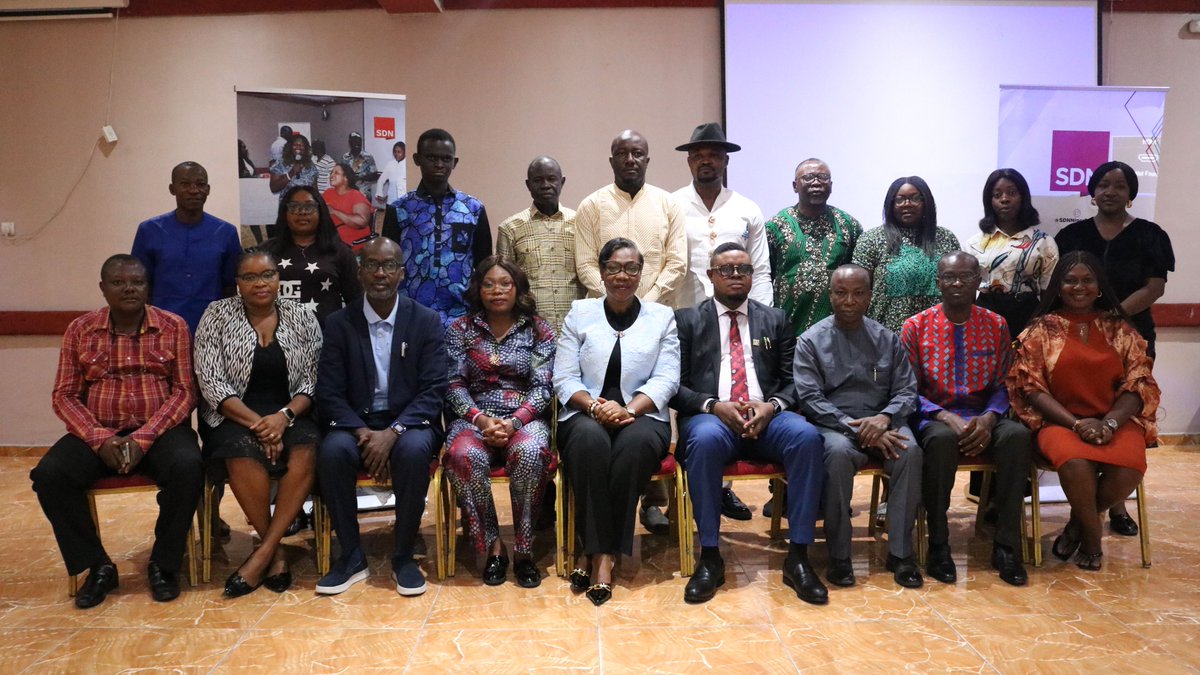
SDN has worked to empower 46 communities spanning six Local Government Areas (LGAs) in Bayelsa State, including host communities, to better navigate the challenges posed by the oil and gas sector. SDN set up 24 Community Monitoring and Advocacy Groups (CMAGs) and trained 288 community members. By amplifying local voices and engaging with office and budget holders, the CMAGs used their Village Books (Charter of demands and sustainable development initiatives tailored to community needs) to advocate to stakeholders. Their efforts have led to significant infrastructure improvements, including the installation of solar street lights and the construction and renovation of roads, schools, and healthcare facilities, leading to investment worth over 2 billion Naira. Till date, even after the end of the project cycle, CMAGs are still recording development projects. The CMAG model was first piloted in Rivers State with a few communities and scaled to Bayelsa State due to tangible results from citizen-led advocacy engagements.
What changed as a result of the project?
There was a perception shift by community members that they can hold their leader’s accountability and attract development to their communities based on their own development demands. They took ownership and reported on tangible development outcomes
How SDN supported or contributed to the change
SDN provided trainings from a rights-based approach on leadership, advocacy, communication skills. SDN also supported with resources to enable community members engage with their representatives.
The CMAG model has been proven as a sustainable approach to community development and accountability through evidenced reporting, therefore:
- Government officials (both elected and appointed) should carry out thorough and inclusive needs assessment before embarking on a project in any community. Such assessments reflect true needs and encourage community ownership.
- Government must ensure that all programmes and interventions are designed to be people-centered.
- Government should incorporate monitoring and evaluation of development projects to hold contractors to account and curb high rate of abandoned projects.
- Donor agencies can support nonprofit organisations such as SDN with funding to replicate this high impact social accountability project in hard-to-reach communities across States in the Niger Delta and Nigeria
- Civil Society Organisations must always teach communities and citizens on human rights so they can galvanise support and make demands to duty bearers from a rights-based approach.
ENABLING CIVIC SPACE IN THE NIGER DELTA (SCALE/PALLADIUM PROJECT)

Objective -
To protect civic freedoms through increased collaboration among CSOs and mobilize support for the domestication/implementation of the Administration of the Criminal Justice Act.
The establishment of the Administration of Criminal Justice Monitoring Committees in both Bayelsa and Akwa Ibom, and the inception of the Police Duty Solicitor Scheme in Rivers State. The project has also resulted in improved collaboration among stakeholders (civil society actors, government MDAs, PwDs and other actors)
What changed as a result of the project?
There was a perception shift by community members that they can hold their leader’s accountability and attract development to their communities based on their own development demands. They took ownership and reported on tangible development outcomes
How SDN supported or contributed to the change
SDN supported with the resources which enabled cluster organisations to mobilise towards the achievement of outcomes mentioned above.
- The Administration of Criminal Justice Monitoring Committees should be well resourced or funded by the State governments and there should be some level of accountability in the discharge of duties by members.
- There should also be sustained advocacy on human rights issues for the media to amplify.
- The Judiciary should look into decongesting correctional centers by treating cases in a timely manner.
DEEPENING ACCOUNTABILITY AND STRENGTHENING INCLUSION (DASI) PROJECT

Objective -
To further contribute to accountable, responsive and inclusive governance in the Niger Delta following the 2023 elections by galvanizing public support to push for the policy demands and secure commitments by the state government to follow through on issues that affect women, young persons as well as persons with disabilities within the state (Rivers State).
The DASI project was an extension of the WeYOU Project where SDN worked directly with 48 selected WeYOU Ambassadors and 32 representatives from civil society, along with private sector representatives, to follow-up on electoral commitments made by elected candidates and policy demands contained in the Women and Youth Agenda (WAYA). Specifically, WeYOUAmbassadors and CSO Networks were supported to carry out advocacy engagements with key stakeholders at the state and local government levels. SDN on this project provided technical support via direct engagements with the Rivers state government on policy priorities.
What changed as a result of the project?
The first ever Rivers State Youth Policy was launched and is being implemented by the Rivers State Ministry of Youth Development. The existing Rivers State Persons with Disabilities Welfare (Enhancement) 2011 was repealed and replaced with a validated draft bill (Rivers State Discrimination Against Persons with Disabilities, 2024) and is currently with the Office of the Public Defender, Rivers State Ministry of Justice pending when the political situation with the State House of Assembly is resolved.
How SDN supported or contributed to the change
SDN provided technical support on the development of these policies and bill and also mobilized civil society organisations, Persons with Disabilities (PwDs) clusters and citizens to push demands to the fore via campaigns and advocacy engagements.
- The political instability in Rivers State should be resolved as a matter of urgency to allow the State House of Assembly to function in her disposition of duties such as treatment of the Rivers State Discrimination Against Persons with Disabilities Bill, 2024
- Donor agencies can support SDN with funding to deepen our work with women, young people and Persons with Disabilities on inclusive and representative governance.
- Government should address the inequality gap in democratic governance structures and decision-making processes by implementing policies which give women, young people including persons with disabilities a voice.
- Citizens especially women, young people and persons with disabilities must learn to question repressive policies, add their voice on issues and demand for adequate inclusion and representation in political governance.
Weak institutions, opaque governance processes, low levels of representation/participation and poor public accountability has weakened the social contract between citizens, government and other duty bearers. This has made it difficult for the Niger Delta’s rich natural resources and public investments to translate into broad-based and sustainable development, resulting in poor service delivery.
Communities often lack access to reliable information or fully consulted during decision-making on programmes and projects that affect them, while opportunities to hold government and businesses accountable remain limited.
SDN works to promote social cohesion across the region by building mutual trust and strengthening citizen’s participation in governance from a rights-based approach. We support civil society organisations and communities to access information; engage government and decision-makers for a more inclusive and responsive governance especially for women, young people and PwDs; advocate for sustainable developmental projects from the management of Host Community Development Trusts(HCDTs) under the Petroleum Industry Act; and demand free, fair and credible elections. Below are some of our flagship projects driving this work.
SDN research across 5 states of the Niger Delta conducted in 2019 revealed a decline over the preceding two decades in women’s representation in politics and leadership positions.
COMPLETED
The Deepening Accountability and Strengthening Inclusion (DASI) project builds and expands on previous work by SDN to increase political participation...
COMPLETED
This two-year project aims to protect basic civil liberties in Akwa-Ibom, Bayelsa and Rivers States and to mobilize support for the domestication/mobilization of the Criminal Justice Act.
COMPLETED
We-YOU-Project is a 19-month project in partnership with ActionAid Nigeria with funding from the UK Foreign, Commonwealth and Development Office (FCDO).
COMPLETED
This six-month project aims to expand collective action by civil society in Rivers State to challenge threats, and create opportunities, to widen civic space.
COMPLETED
This project seeks to improve the relationships between electricity distribution companies (DisCos), consumers, and other key stakeholders by building awareness, communication, and trust between them.
COMPLETED
This project aims to support the Ministry of Niger Delta Affairs (MNDA) to ensure the effective coordination and monitoring of development initiatives in the Niger Delta.
COMPLETED
This project aims to increase communication between civil society organisations (CSOs) and individuals, and the Niger Delta Development Commission’s (NDDC) to improve transparency and accountability in infrastructure projects to develop the Niger Delta.
COMPLETED
This project is seeking to improve the credibility, fairness, and freedom of state-level elections in Bayelsa, funded by the United Nations Democracy Fund (UNDEF) for the period of 18 months in Bayelsa State.
COMPLETED
Niger Delta Watch 2019 is a citizen-led elections observation project reporting on the 2019 Nigerian presidential and governorship elections.
COMPLETED

