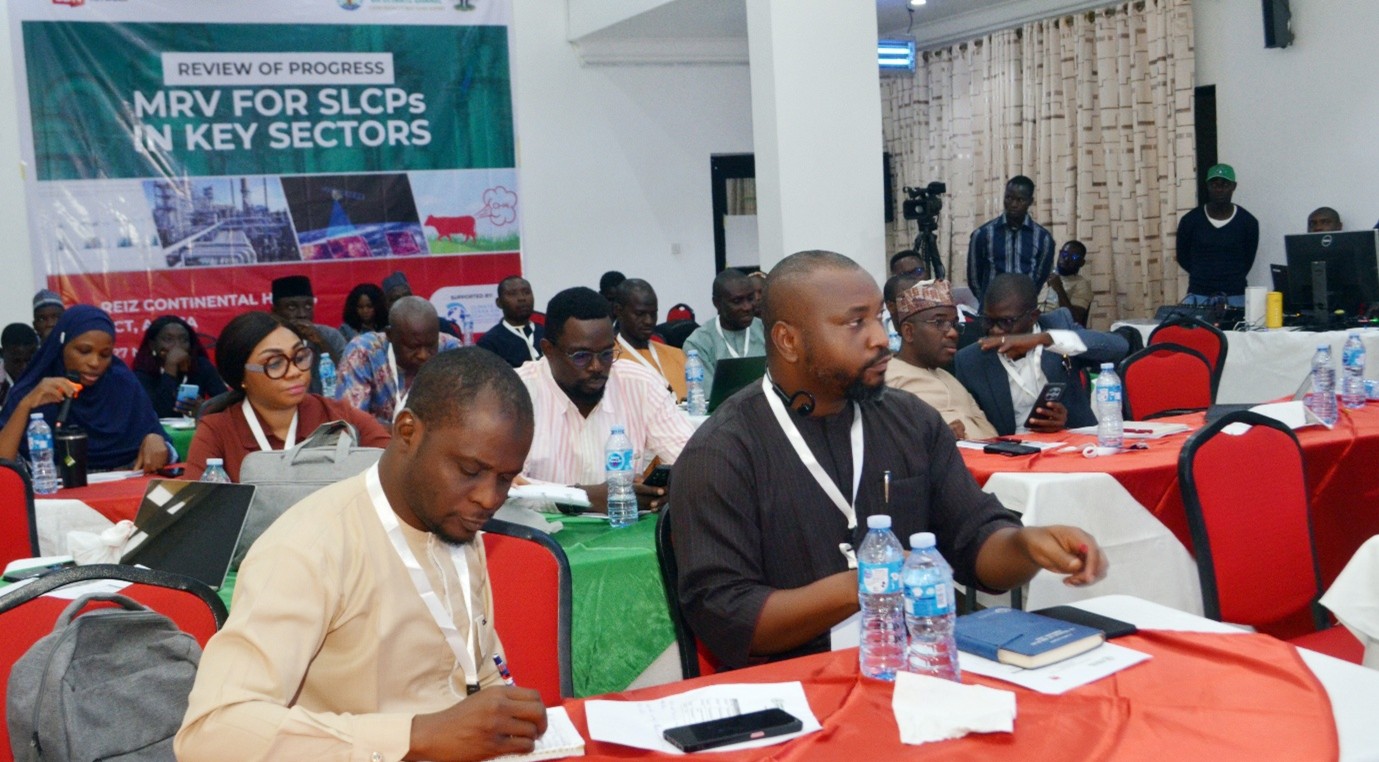
Nigeria is undertaking significant improvements in its monitoring, reporting, and verification (MRV) systems for Short-Lived Climate Pollutants (SLCPs), supported by the Climate and Clean Air Coalition (CCAC) and implemented by the Stakeholder Democracy Network (SDN). The primary goal of this initiative is to enhance the country’s capacity to track and mitigate methane and black carbon emissions accurately. Originally planned to engage four governmental institutions, the project quickly expanded to include sixteen Ministries, Departments, and Agencies (MDAs), reflecting strong stakeholder demand for comprehensive SLCP management. This expansion has broadened the project’s impact across key emitting sectors.
To effectively address critical gaps, SDN used a needs-based approach that focused on the availability of SLCP data, capacity for emission estimation, quality assurance and quality control (QA/QC) processes, and inter-agency coordination. This assessment resulted in the creation of an SLCP MRV Needs Assessment Inventory, which informed a targeted training program for the participating MDAs. The capacity-building training enhanced Nigeria’s ability to quantify SLCP emissions using methodologies from the Intergovernmental Panel on Climate Change (IPCC), with a primary focus on Tier 1 approaches. The training also emphasised long-term ownership of MRV processes. It included peer-learning sessions in which advanced MDAs, such as the Nigerian Upstream Petroleum Regulatory Commission (NUPRC), shared best practices in methane tracking and digital reporting tools. Following the training, SDN conducted a follow-up assessment to evaluate progress among the MDAs. The review found that many institutions had begun implementing key recommendations, including establishing basic QA/QC procedures, improving internal data coordination, and initiating early SLCP data collection.
Several agencies reported advancements in methane monitoring and began integrating MRV considerations into policy and planning processes. As a result of this intervention, Nigeria has significantly strengthened its institutional capacity for SLCP MRV, although further support is necessary for full operationalisation. The National Climate Change Council (NCCC) and the participating MDAs have enhanced their understanding of emissions estimation, improved collaboration on SLCP reporting, and initiated steps to establish a cohesive national system for monitoring and verification. This initiative underscores the importance of targeted support for countries seeking to reduce SLCP emissions. With ongoing support from the CCAC, Nigeria aims to build on its achievements, extend MRV to additional sectors, digitise reporting systems, and further integrate SLCP considerations into national climate strategies, thereby contributing to global efforts to reduce air pollution and mitigate climate change.