
Supporting peace and security
15+ Major Conflicts Resolved
15+ major conflicts resolved across 16 target communities in Delta and Bayelsa States
240 Community Leaders Trained
240 community leaders and youth trained in conflict transformation (45% women)
Support Sustainable Peace and Development Process in Rumuekpe (Funder – Dutch Embassy)
Between summer 2005 and November 2008, Rumuekpe was torn apart by a destructive crisis that cost at least 60 lives, including women and children. Armed gangs waged battles over access to oil contracts and payments. Shell’s role was instrumental in fueling the crisis and the strategies adopted by the company and its contractors caused widespread human rights violations and contributed to mass militarization. At the peak of the conflict, the company kept awarding lucrative contracts to whichever rival gang-controlled access to its infrastructure, rewarding violence. Both, state and non- state security agencies that operated in Rumuekpe, rather than protecting the lives and properties of the people, committed atrocities on the local population, humiliating and raping women, engaging the children on forced labour, and killing and torturing Rumuekpe people. Houses and means of livelihood were destroyed, thousands of people displaced. Rumuekpe became a ‘ghost town’ and a safe haven for kidnappers. Until today, not all its inhabitants returned, while those who did are struggling to rebuild their community and shattered lives.
What changed as a result of the project?
• The project contributed greatly to the reconciliation of different factions of armed groups operating within and outside the community. All actors involved in the conflict embraced peace and culture of observing human rights and common vision.
• SDN facilitated the implementation of durable solutions to conflict, based on a shared vision of a community where civil, political and socio-economic rights of citizens are respected by oil companies operating in the community.
• There was increased citizens’ awareness of the connection between the abuses of constitutional rights and conflict, as well as the impact of failed Corporate Social Responsibility (CSR) strategies;
• Our intervention also contributed to increased awareness of the roadmap for peace among Rumuekpe community members and improved community inclusiveness and leadership accountability.
• Our intervention contributed to improved security as a prerequisite for community development across the seven communities in Rumuekpe.
• The project strengthened oil companies’ collaboration with the Rumuekpe community; and therefore contributed to more sustainable community development and reintegration of armed groups through their General Memorandum of Understanding (GMoU).
• Evidence of impact, including relevant reports, publications or links.
Our engagement in the community led to a gradual return of displaced persons who started rebuilding their destroyed houses in an effort to return to a normal life.
The project improved relationships between community leadership, oil companies and the former parties to the conflict.
Report on sustainable development in Rumekpe – Find link here
How SDN supported or contributed to the change
• SDN has been present in Rumuekpe since 2009, taking the lead on documenting the conflict and its impact on human rights. We supported the peacebuilding and reconciliation process and the establishment of legitimate governance structures. We carried out broad consultation processes, built leaders’ capacity in conflict transformation and worked to reconcile different factions of armed groups.
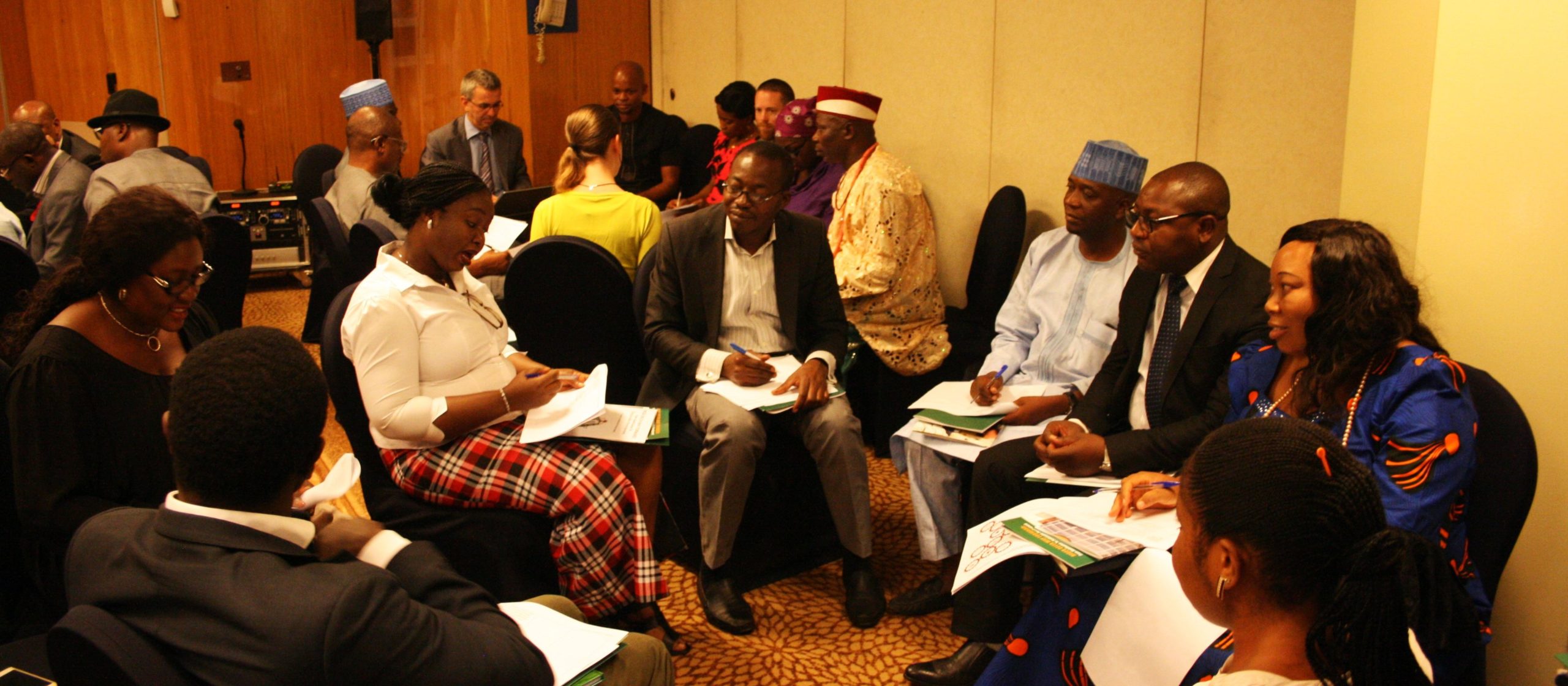
• SDN facilitated peaceful dialogues with different parties to the conflict: armed groups, community leadership, oil companies and security services. We also carried out mediation, reconciliation and healing sessions between community members, oil company and state security representatives.
• SDN hosted and facilitated a successful reconciliation meeting and oath - taking process between the conflicting groups and leaders from Rumuekpe community. The meeting was held at SDN office in Port Harcourt, Rivers State.
The European Union Project - A Community-Centered Approach to Transforming Criminality and Violence in the Niger Delta Project:

Background:
The Niger Delta region has long been plagued by multi-faceted challenges and also known for its high levels of criminality and violence, including activities such as piracy, kidnapping, sea robbery, militancy, vigilante and mob actions, abuses by security forces, attacks on energy infrastructure (including electricity installations and illegal oil bunkering), and domestic and gender-based violence, such as rape and child abuse. Political tensions are further exacerbated by issues like poor leadership, lack of inclusion, inequitable resource distribution, activities of cult groups and lack of accountability. These factors contribute to the deepening crisis of development, instability, and violent conflicts in Rivers, Bayelsa, and Delta States that negatively impacting local communities.
Today, the lack of economic opportunities for the repentant militants, youths and women, and loss of livelihoods from environmental degradation, cult and gang activities, as well as government and private sector stakeholders’ insensitivity continue to push Niger Deltans, especially young people, unemployed university graduates, orphans, single mothers, and other marginalised groups, to resort to criminal enterprises. Meanwhile, militarised government responses to insecurity and criminality in the Niger Delta have also caused a cascade of negative consequences in affected communities. SDN therefore implemented the European Union (EU) funded project titled: A Community-Centered Approach to Transforming Criminality and Violence in the Niger Delta in 16 communities (9 in Delta State) and (7 in Bayelsa state) communities in Bayelsa and Delta State respectively.
What changed as a result of the project?
The project helps to create an environment that builds trust among stakeholders by actively involving them in the decision-making process and promoting dialogue and collaboration that contribute to the overall social cohesion, stability, peace and development of the region.
• Some of the changes experienced as a result of the project included but not limited to acquisition of skills and techniques to resolve conflict. The project contributed and recorded at least 40 instances where communities’ leaders and youths demonstrated improved capacity in resolving conflicts in their various communities.
• Dialogues with communities and other stakeholders promote understanding and effective implementation of the Host Community Development Trusts (HCDTs) across the project communities.
• In addition, significant progress was made in reducing drugs abuse and intake of illicit substances through community mobilization, youth engagement, and multi-stakeholder partnerships. There is drastic reduction in public smoking of Indian hemp known as (Igbo), shisha, and collus. In addition, sales of hard drugs like tramadol and the rest have reduced as well.
• Over 120 supported smallholder farmers adapted and used the introduced climate-smart agriculture practices and farm inputs in their farmland, and attested that the new practices were easier to implement and preferable than their traditional farm practices.
• The Project also recorded increased income generation and customers patronage for over 120 small business owners that benefited from the livelihood empowerment.
• There is reduction in water burn diseases as a result of the usage and consumption of solar powered boreholes provided in Imiringi (Bayelsa) and Agbarha Otor – Otorogba (Delta).
• Esanma and Ovwian communities are generating incomes from the speed boats economic empowerment. This was the first economic empowerment that is generating incomes for the communities.
• Improved capacity of vigilante groups from Agbara-Otor, Sagbama and Agbere through cutting-edge training that equipped them to be more professional in discharging their duties and to understand intelligence gathering, modern methods of detecting crime & criminality, code of conducts of vigilantes and incident/crime reporting.
The ‘Devil’s Workshop’ report published by SDN – Find the link here
How SDN supported or contributed to the change
SDN conducted research on the Participatory consultative analysis of the local drivers of social exclusion, lack of economic opportunity, and environmental degradation. This activity was conducted across the project communities in Rivers, Bayelsa and Delta States. The research explores the current landscape of crime and violence in the Niger Delta, providing a comprehensive summary of insights gathered from a wide range of stakeholders, including community leaders, citizens, security personnel, and even perpetrators of criminal activities among others. A report was developed titled the ‘Devil’s Workshop’ which simply means that “An idle mind is the Devil’s workshop’.
SDN organized training on inclusive leadership, conflict transformation and non-adversarial engagement for 120 community leaders and the youth from Delta State.
SDN organised 3 Peer Exchange workshops for 120 selected community youths across the 24 project communities in Delta State. The aims of the workshop were to foster inclusion and participation of youths in community decision-making in their various communities; learn from one another; share workable strategies on overcoming youth-related challenges, adapt success stories from other communities and collectively proffer sustainable blueprints for future engagements with their community leadership structures and other relevant actors and institutions.
SDN organised Intra-community Intergenerational dialogue with community members from the six (6) communities from 3 LGAs in Bayelsa State and eight (8) communities from 4 LGAs in Delta State respectively. The objective of the activity was to increase collaboration among different generations such as women, youth leaders, CDC, elders, chiefs, traditional leaders and other community stakeholders to develop joint, effective, sustainable local mechanisms for early warning response, dispute management, criminal and violence prevention, and mitigation at the community levels.
SDN conducted livelihood assessment to further discussions on prioritised community needs identified during the dialogues and implemented Community and Individual livelihood projects in 16 project communities in Bayelsa and Delta States. The livelihood projects are; provision of cassava processing mills, installation of solar powered boreholes, business support to small holder business owners, climate smart training and supply of agriculture input and equipment to community farmers, supply of speed boats and accessories.
The Niger Delta and surrounding regions in Nigeria have long been marred by violence, criminality, and insecurity, driven by...
LIVE
COMPLETED
COMPLETED
COMPLETED
COMPLETED


