For more than sixty years, the Niger Delta’s onshore oil industry was run by international oil companies (IOCs). That is changing fast. This report documents how IOCs are selling their onshore assets to Nigerian domestic oil companies (DOCs), and asks the question that communities, regulators and policymakers need answered before the exit is complete: who inherits the pollution, the debts and the risks, and who will be held to account?
The scale of the shift
The report tracks 26 major divestments between 2010 and 2021. Twenty-four were finalised by the end of 2015 and two more followed. Every block was acquired by a domestic company except one, bought by China’s Sinopec. More than three-quarters (77%) of the blocks sold were onshore, and Delta State led the exodus: all ten blocks divested there were sold by the end of 2014.
IOCs now hold their lead by the narrowest of margins. Across the 112 oil mining licences analysed, IOCs average 32.0% equity per concession against 31.5% for DOCs, and are involved in operating 53 licences (47%) against 50 (45%) for DOCs. Any further sale tips the balance to domestic majority ownership, and more sales are coming: six licences were due to expire before 2024, and there are signs that IOCs may sell their entire onshore portfolios by listing their Nigerian subsidiaries for sale, including Shell, whose equity across 19 licences was valued at US$2.3 billion.
Why the majors are leaving
IOCs point to rising costs and risk. According to one domestic company, starting an oil project in Nigeria costs about 69% more than the global average, and production costs US$20–30 a barrel. An estimated 5–20% of daily crude production is stolen, nearly three-quarters of the Niger Delta’s pipelines are reported to be more than a decade overdue for replacement, and the shipping industry has faced a “war surcharge” estimated at up to US$1 billion a year. Banks and insurers are also retreating from fossil fuel projects, and Chevron’s US$10–11 billion write-down shows how “stranded assets” are already reshaping portfolios.
But the report argues that many of the pressures IOCs cite were created or worsened by their own operations: security and service contracts awarded to local elites and conflict actors, spills left uncleaned that communities say pushed them towards artisanal refining, and decades of corporate social responsibility spending that built dependency and distrust rather than development. Legal risk is rising too. In 2021 the UK Supreme Court allowed claims over Niger Delta spills to proceed against Shell’s parent company, and a Dutch court had already ruled against Shell, and many people have concluded that, by selling up, the IOCs are “running away from their mess”.
What the exit means
- Domestic companies inherit the risk with less capital. DOCs borrowed an estimated US$10 billion between 2012 and 2014 to fund acquisitions. That debt is estimated at around 40% of Nigerian banks’ collective loan assets and reportedly reached about ₦5.2 trillion (US$12.7 billion) by December 2020, so a wave of DOC insolvencies could threaten the wider economy.
- Pollution may get worse, not better. SDN’s 2018 Environmental Performance Index found that DOCs spill more oil and flare more gas for every barrel they produce than IOCs. They are also inheriting ageing infrastructure: one domestic company, Aiteo, is suing Shell for US$4 billion over the condition of a pipeline it bought.
- Routes to justice could narrow. Communities have recently won hearings abroad against IOCs, but DOCs are registered only in Nigeria, where courts have repeatedly failed to enforce judgements. If IOCs sell their Nigerian subsidiaries, they could also escape liability for historic spills.
- Transparency could fall. Financial disclosure rules that apply to IOCs in the UK and EU do not apply to DOCs, and most DOCs are owned by business figures from outside the Niger Delta and managed from Lagos, so divestment does not deliver the local ownership that “indigenisation” promises.
- Government is doubling down. NNPC has set a target of raising oil production by 50% over ten years, even as Carbon Tracker estimates a possible 70% shortfall in federal revenue over the next two decades as the world decarbonises.
What the report calls for
IOCs must not be allowed to “buy their way out”. They should fund environmental remediation, decommission disused infrastructure and pay fair compensation, with proper community consultation. The Federal Government should establish a strong, independent environmental regulator, and reinvest the capital earned from divestments into non-fossil sectors and renewable energy rather than incentivising further oil and gas expansion.
Why This Matters Today
The report’s central warning has since come to pass. Shell agreed to sell its Nigerian onshore subsidiary, the Shell Petroleum Development Company (SPDC), in January 2024 and completed the sale on 13 March 2025. The buyer was Renaissance, a consortium of four Nigerian companies (ND Western, Aradel Energy, First E&P and Waltersmith) and the international group Petrolin. SPDC has been renamed Renaissance Africa Energy Company and is no longer part of the Shell group. The joint venture it operates holds 15 onshore and three shallow-water oil mining leases.
This is exactly the subsidiary-sale route the report flagged as a way for companies to distance themselves from historic liabilities. For the communities living alongside those leases, the questions it raised are no longer theoretical: who pays for clean-up, who regulates a new operator with less scrutiny, and where can communities take their claims.
What changed:
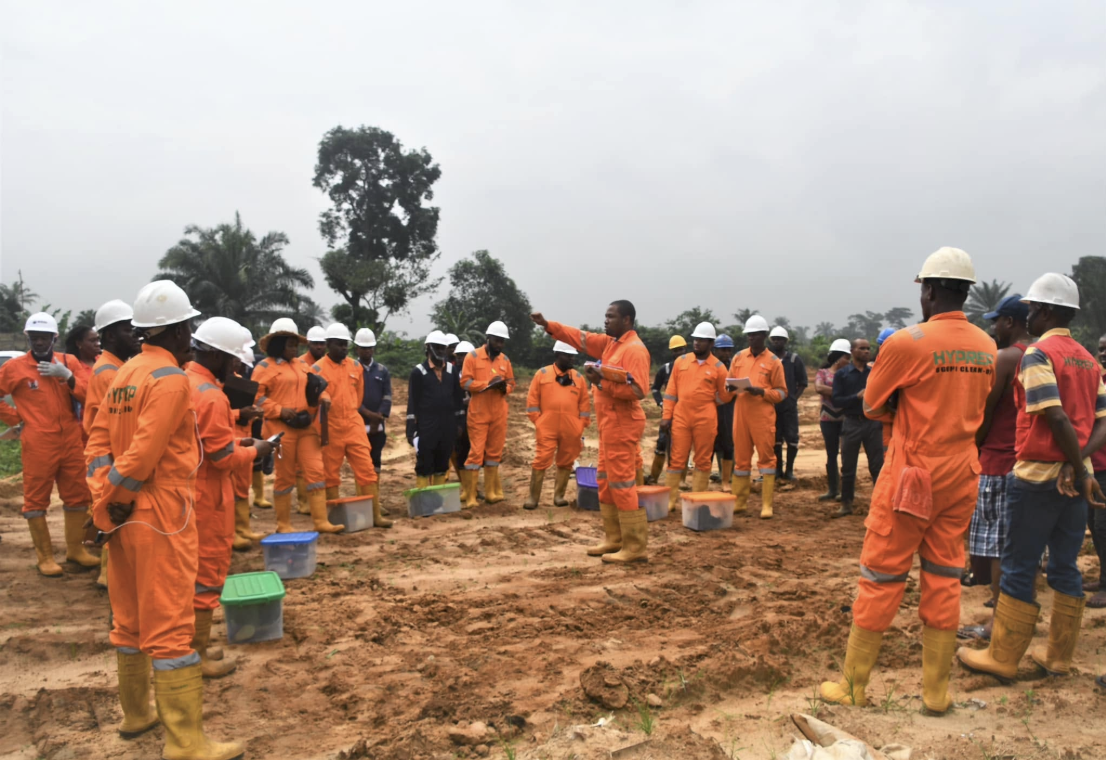
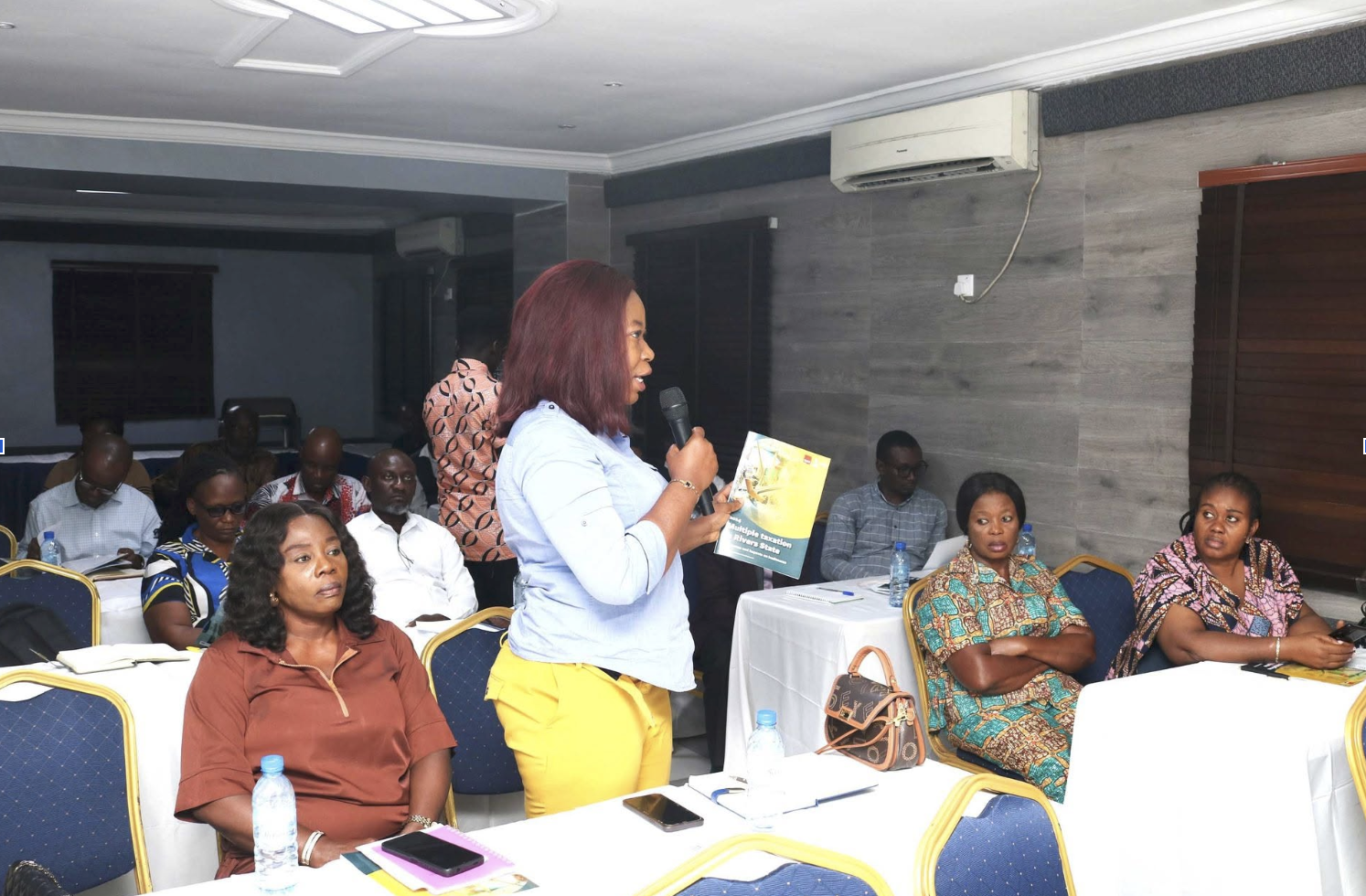
With support from SOMO (Centre for Research on Multinational Corporations), SDN took the report’s questions to the communities most affected. Town-hall meetings were held in Otuabagi, Ogbia Local Government Area, Bayelsa State, the community that hosts Nigeria’s first commercial oil well, and in Owevwe, Ughelli North Local Government Area, Delta State. In Otuabagi, community members reported medical test results they said indicated the presence of hydrocarbons in their bloodstream.
SDN used this evidence to brief National Assembly oversight committees covering Petroleum Resources, Host Communities and Environment, anchored in the National Principles for Responsible Oil Industry Divestment, a framework developed by Professor Richard Steiner, SOMO and SDN and validated by civil society organisations across the region. SDN’s 2024 Annual Report records that this advocacy contributed to the National Assembly summoning oil companies for formal hearings on divestment practices in late 2024, with lawmakers signalling an intention to amend the Petroleum Industry Act to strengthen host-community protections during divestment.